
Tafsir al-Mizan, Volume 9
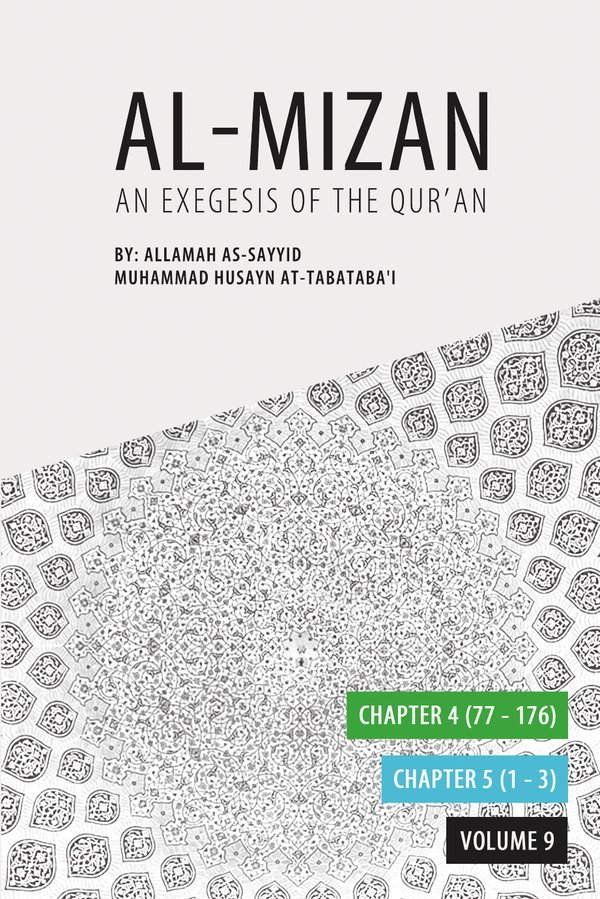
Volume nine continues the commentary on Sūrah al-Nisāʾ (Chapter 4) from verses 77 to 176 and begins with the first three verses of Sūrah al-Māʾidah (Chapter 5). This volume covers intricate theological and legal discussions while addressing ethical and social themes in Islamic thought.
The volume opens with an exploration of divine justice and human agency in the attribution of good and evil (verses 77–80). ʿAllāmah Ṭabāṭabaʿī discusses the Qurʾānic stance that good comes from God as the Creator of all goodness, while evil is a result of human actions and their deviation from divine guidance. This philosophical discourse emphasizes the relationship between divine mercy, human responsibility, and the inherent good in God’s creation.
The exegesis then addresses specific legal rulings, such as the laws of retribution and compensation, and the framework of societal justice (verses 92–100). The commentary discusses the ethical considerations surrounding the treatment of the weak and oppressed, particularly emphasizing migration and the moral obligations of believers towards those seeking refuge.
A significant portion is dedicated to the concept of ‘iṣmah (sinlessness) in the Qurʾān (verses 105–126). ʿAllāmah Ṭabāṭabaʿī elaborates on how ‘iṣmah is rooted in divine knowledge and serves as a safeguard against sin and error. This discussion ties into broader themes of divine selection, leadership, and the role of prophets and imāms in guiding humanity.
In the final part of the commentary on Sūrah al-Nisāʾ, the focus shifts to familial and societal ethics, including issues related to justice, fairness, and the treatment of women and orphans.
The volume concludes with an introduction to Sūrah al-Māʾidah (Chapter 5), beginning with a discourse on the Qurʾānic understanding of contracts (ʿaqd) and the ethical dimensions of lawful and unlawful actions, particularly concerning dietary laws. In discussing the third verse of Sūrah al-Māʾidah, ʿAllāmah Ṭabāṭabaʿī reflects on the profound declaration of the completion and perfection of Islam: “Today I have perfected your religion for you, and I have completed My blessing upon you, and I have approved Islam as your religion.” He highlights how this verse signifies the culmination of divine guidance through the appointment of leadership, particularly in reference to the event of Ghadīr Khumm, where Imām ʿAlī’s guardianship was proclaimed. This milestone is presented as the final piece in the establishment of a comprehensive system of life in Islam.
Subtle discussions in this volume include the interplay between free will and predestination, the balance of divine mercy and justice, and the ethical implications of human actions in light of divine decree. Through these reflections, ʿAllāmah highlights the Qurʾānic vision of a society founded on equity, compassion, and accountability.
Volume nine of Tafsīr al-Mīzān showcases ʿAllāmah Ṭabāṭabaʿī’s ability to harmonize Qurʾānic exegesis with philosophical inquiry and ethical reflection. It is a vital resource for understanding the Qurʾānic guidance on personal, familial, and societal matters.
Read this volume online
The commentary in this volume is on almizan.org:
Where to buy
See our authorised distributors, or email [email protected].