
Tafsir al-Mizan, Volume 21
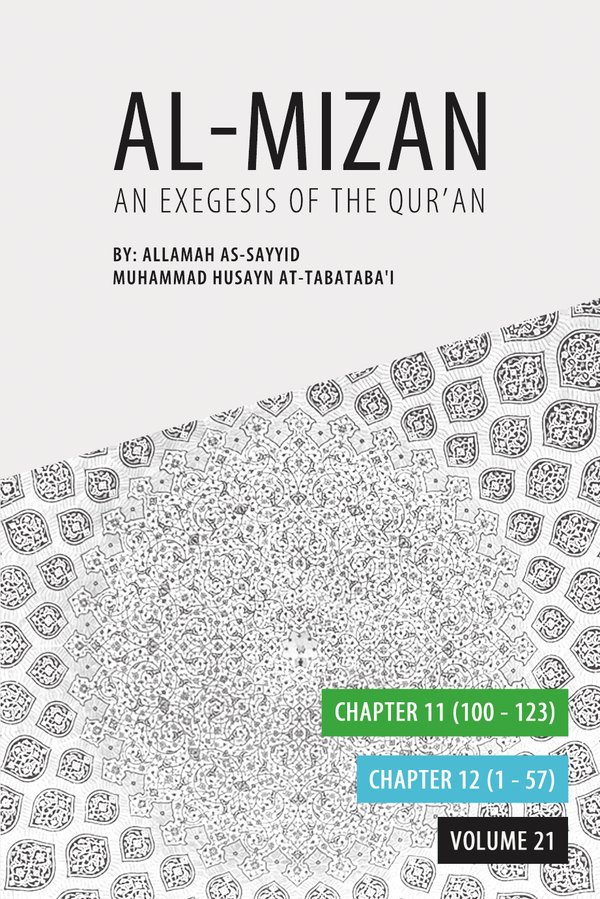
Volume twenty-one of Tafsīr al-Mīzān by ʿAllāmah Ṭabāṭabāʾī completes the commentary on Sūrah Hūd (Chapter 11) and begins the detailed exegesis of Sūrah Yūsuf (Chapter 12). This volume explores profound theological, ethical, and historical themes while offering spiritual insights into the narratives of earlier prophets.
The commentary continues with verses 100–123 of Sūrah Hūd, addressing the outcomes of past nations and their relevance for contemporary believers. ʿAllāmah reflects on the narratives of destruction that befell disobedient nations, emphasizing the lessons of divine justice and mercy. He probes into the balance between free will and predestination, illustrating how human actions lead to inevitable consequences. Key themes include the purpose of trials, the role of patience and reliance on God, and the importance of steadfastness in adversity. The volume emphasizes that divine decrees serve as a test for humanity and a means to manifest faith and resolve.
The commentary begins on Sūrah Yūsuf with verses 1–57, offering an in-depth analysis of the narrative of Prophet Yūsuf (Joseph). ʿAllāmah highlights the chapter’s unique structure as a continuous narrative dedicated to a single story, rich in moral and spiritual lessons. ʿAllāmah explains the Qurʾān’s presentation of Yūsuf’s story as a means to provide timeless guidance, reflecting divine wisdom in human affairs. The dream in which Yūsuf sees eleven stars, the sun, and the moon bowing to him is interpreted as a prophetic vision foreshadowing his future and the fulfillment of divine plans. The jealousy and betrayal by Yūsuf’s brothers are analyzed as reflections of human weakness and the consequences of envy. ʿAllāmah emphasizes the importance of forgiveness and the transformative power of divine providence.
Yūsuf’s journey through slavery, imprisonment, and eventual rise to prominence in Egypt is explored as a testament to his unwavering faith, moral integrity, and reliance on God. Yūsuf’s encounter with the wife of Potiphar highlights his steadfastness in resisting temptation. This episode serves as an example of the Qurʾānic emphasis on purity, chastity, and reliance on God in moments of moral trial.
Volume twenty-one offers deep reflections on several ethical and philosophical themes. The interplay between divine decree and human agency is examined, particularly in the context of Yūsuf’s trials and his ultimate success. Dreams are presented as a medium of divine communication, with Yūsuf’s ability to interpret them underscoring his prophetic insight. The narrative of Yūsuf’s reunion with his brothers emphasizes the Qurʾānic values of forgiveness, reconciliation, and the triumph of truth over falsehood. The overarching message of the chapter emphasizes the significance of patience and faith in navigating life’s challenges and achieving spiritual growth.
Volume twenty-one is a profound exploration of the themes of divine justice, human accountability, and moral integrity. ʿAllāmah Ṭabāṭabāʾī’s meticulous analysis and spiritual depth illuminate the timeless relevance of Sūrah Hūd and Sūrah Yūsuf. This volume continues to be an essential resource for understanding the Qurʾānic vision of a life guided by faith, resilience, and divine wisdom.
Read this volume online
The commentary in this volume is on almizan.org:
Where to buy
See our authorised distributors, or email [email protected].