
Tafsir al-Mizan, Volume 1
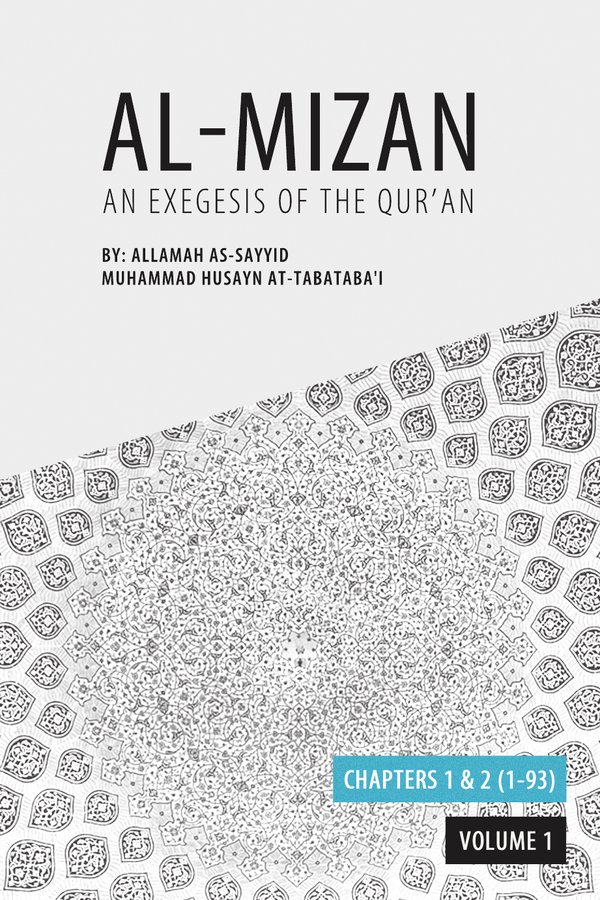
This volume serves as an introduction to ʿAllāmah Ṭabāṭabāʾī’s monumental exegesis of the Qur’an and begins with the commentary of Sūrah al-Fātiḥah (Chapter 1) and part of Sūrah al-Baqarah (Chapter 2:1–93), laying the foundational principles for understanding the Qur’an through the Qur’an itself, elucidating its themes with clarity and depth.
The author opens the commentary with Sūrah al-Fātiḥah, highlighting its profound role as the “Opening of the Book.” He explains the significance of the verses as a comprehensive summary of the Qur’anic worldview. The chapter emphasizes servitude to God, the necessity of divine guidance, and the path to attaining eternal felicity. ʿAllāmah explores the meanings of God’s names, such as al-Raḥmān (The Beneficent) and al-Raḥīm (The Merciful), illustrating how these attributes shape the relationship between the Creator and His creation.
In the commentary on the initial verses of Sūrah al-Baqarah, ʿAllāmah examines the concept of guidance and its manifestation through the Qur’an. The chapter’s themes include the distinctions between believers, disbelievers, and hypocrites, as well as the spiritual and societal implications of adhering to divine commands. ʿAllāmah explores the role of the Qur’an as a source of guidance for the pious and reflects on the characteristics of those who seek and benefit from this guidance.
A significant portion of this volume is dedicated to the concept of miracles, particularly the Qur’an’s own miraculous nature. ʿAllāmah identifies the unique linguistic, intellectual, and prophetic aspects that establish the Qur’an as an enduring miracle. He elaborates on the challenges posed to humanity to replicate its verses and emphasizes the coherence and eloquence of the Qur’an as evidence of its divine origin.
The volume also includes a comprehensive discussion on intercession (verses 2:47–48), exploring its theological dimensions and implications. ʿAllāmah examines the Qur’anic emphasis on divine mercy and justice, highlighting the role of intercession in balancing accountability and forgiveness. He clarifies misconceptions surrounding intercession and explains its significance in the broader context of divine guidance.
This volume engages in philosophical and theological discussions on free will, divine decree, and human accountability. ʿAllāmah examines the interplay between compulsion and delegation, illustrating how the Qur’an provides a balanced perspective on human actions and divine justice. He addresses the implications of these principles on ethics, society, and individual responsibility.
Throughout the commentary, ʿAllāmah supports his explanations with traditions from the Prophet Muḥammad and the imāms of the Ahl al-Bayt (peace be upon them). He integrates philosophical reflections with Qur’anic exegesis, ensuring a cohesive understanding of the Qur’an’s teachings.
ʿAllāmah Ṭabāṭabaʿī establishes the methodology and intellectual framework for the subsequent volumes, making it an essential resource for understanding his approach to Qur’anic exegesis. Its focus on the Qur’an’s central themes, theological concepts, and ethical imperatives provides a profound introduction to the Qur’anic worldview and its relevance to humanity.
Translator: Late Allamah Sayyid Akhtar Rizvi
Read this volume online
The commentary in this volume is on almizan.org:
Where to buy
See our authorised distributors, or email [email protected].