
Tafsir al-Mizan, Volume 14
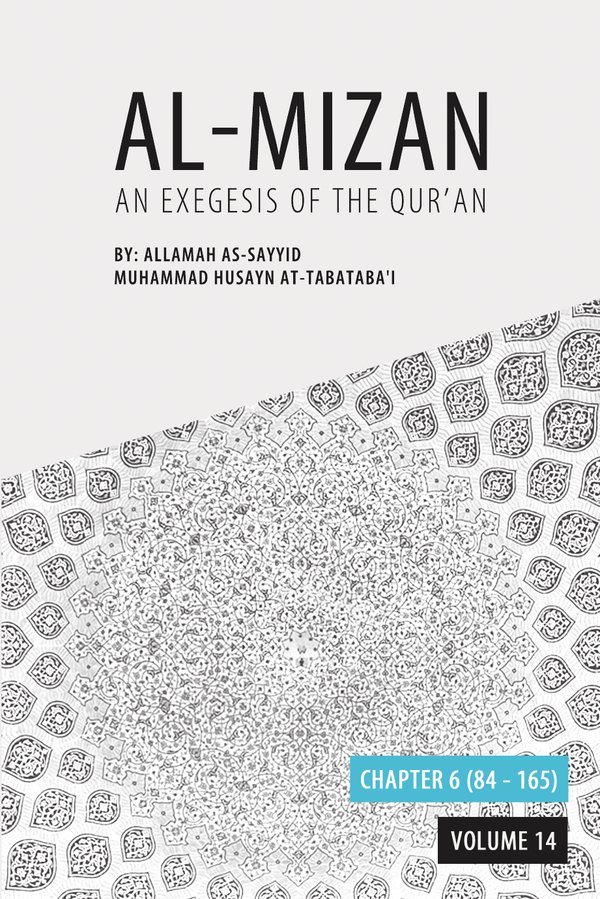
This volume completes the commentary on Sūrah al-Anʿām (Chapter 6), covering verses 84–165. It provides profound insights into monotheism, divine guidance, and ethical living, addressing theological, social, and philosophical themes integral to the Qurʾānic message.
The volume begins with a discussion of the chain of divine guidance (verses 84–90), tracing the lineage of prophets who were chosen by God to convey His message. ʿAllāmah Ṭabāṭabaʿī emphasizes that this continuity of guidance reflects God’s mercy and the divine preservation of monotheism throughout history. The commentary explores the characteristics of these prophets, highlighting their steadfastness and moral excellence, which serve as exemplars for humanity.
A significant portion of this volume (verses 91–105) critiques the rejection of divine revelation by previous communities, particularly the People of the Book. ʿAllāmah discusses the universality of the Qurʾānic message, its distinction from earlier scriptures, and the false claims made about the nature of God. This section also examines the Qurʾānic concept of barakah (blessing), emphasizing its role in human prosperity and spiritual growth.
The verses further elaborate on the nature of divine guidance (verses 106–121), stressing the importance of adhering strictly to God’s commands and avoiding the pitfalls of innovation in religion. ʿAllāmah provides a detailed discussion on lawful and unlawful provisions, emphasizing the ethical and spiritual dimensions of dietary laws and their impact on human behavior and societal well-being.
Verses 122–135 introduce profound reflections on life, death, and divine light. ʿAllāmah examines the Qurʾānic symbolism of light and darkness, interpreting them as representations of faith and disbelief, guidance and misguidance. This section highlights the transformative power of divine guidance in elevating human potential and illuminating the path to salvation.
The volume also addresses the moral and social corruption of polytheistic practices, particularly those related to animal sacrifices (verses 136–150). ʿAllāmah critiques the arbitrary and superstitious practices of the disbelievers, contrasting them with the rational and ethical framework of Islam. This discussion is linked to the Qurʾān’s emphasis on rationality, justice, and the sanctity of life.
In the concluding verses (151–165), the commentary highlights the ethical code outlined in the Qurʾān, which serves as a universal charter for human conduct. ʿAllāmah reflects on the Ten Commandments-like injunctions provided in this section, discussing their role in fostering individual and collective well-being. The volume concludes with an emphasis on accountability, the consequences of human actions, and the Qurʾān’s call to reflect on the signs of God in creation.
Subtle discussions throughout the volume include the philosophical implications of divine justice, the interplay of free will and predestination, and the Qurʾānic view of human responsibility. ʿAllāmah also explores the concept of the “straight path” as the ultimate goal of divine guidance, uniting humanity under the banner of monotheism and justice.
Volume fourteen of Tafsīr al-Mīzān is a masterful exposition of Qurʾānic teachings, blending rigorous analysis with spiritual and ethical insights. It offers invaluable guidance for understanding the timeless principles of Islam and their relevance to contemporary life.
Translator: Tawus Raja
Read this volume online
The commentary in this volume is on almizan.org:
Where to buy
See our authorised distributors, or email [email protected].