
Tafsir al-Mizan, Volume 18
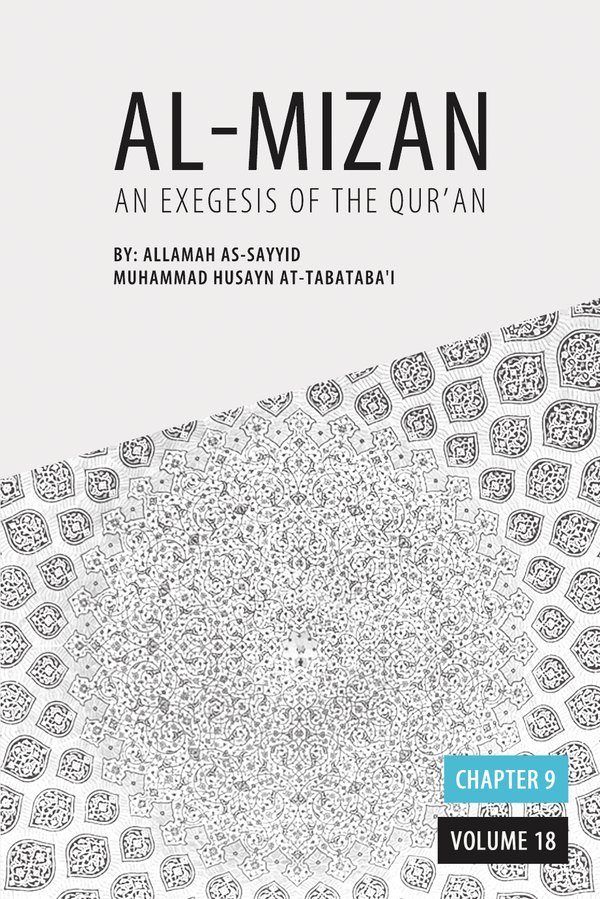
Volume eighteen begins the commentary on Sūrah al-Tawbah (Chapter 9), covering verses 1–129. This volume addresses key theological, historical, and social themes, with a focus on the nature of divine commands, treaties, repentance, and the consequences of hypocrisy.
The volume opens with an analysis of the proclamation of repudiation (barāʾah) against the idolaters who violated their treaties (verses 1–16). ʿAllāmah Ṭabāṭabaʿī examines the ethical principles underlying this proclamation, highlighting that treaties were only revoked in response to repeated treachery by the disbelievers. This section highlights the Qurʾānic emphasis on justice and the importance of fulfilling obligations.
A central theme in this volume is the nature and conditions of divine mercy and forgiveness (verses 17–28). ʿAllāmah elaborates on the requirements for repentance and its transformative power in repairing the relationship between humanity and God. He reflects on the sanctity of sacred sites and the responsibility of believers to uphold them.
The commentary provides an extensive discourse on the Battle of Tabūk (verses 29–75). ʿAllāmah analyzes the circumstances leading to this campaign, the trials faced by the Prophet and his companions, and the behavior of the hypocrites who attempted to undermine the Muslim community. The discussion includes reflections on the spiritual and social dimensions of jihād, illustrating its role as a collective effort to uphold truth and justice.
ʿAllāmah also discusses the Prophet’s migration (hijrah) from Mecca to Medina, referencing verse 9:100. He reflects on the migration’s significance as a pivotal moment in Islamic history, representing the establishment of a just and unified Muslim community. The verse emphasizes the virtues among the Muhājirūn (Emigrants) and the Anṣār (Helpers), highlighting their sacrifices and unwavering faith as examples for all believers.
A significant portion of the commentary addresses the characteristics and consequences of hypocrisy (verses 64–80). ʿAllāmah identifies the traits of hypocrites, including their deceitful actions, lack of commitment to the community, and attempts to sow discord. He emphasizes the importance of sincerity and steadfastness in faith as safeguards against hypocrisy.
The volume also discusses the role of charity and financial obligations in fostering social solidarity (verses 60–106). ʿAllāmah examines the principles of zakāt and other forms of charity, emphasizing their role in purifying wealth and strengthening communal bonds. The theological and ethical implications of hoarding wealth and neglecting charitable duties are explored in depth.
Another noteworthy discussion pertains to the concept of divine composure (sakīnah) granted to believers during trials and battles (verses 36–50). ʿAllāmah interprets this as a divine gift that instills peace and strengthens faith, enabling believers to face challenges with resilience and confidence.
The volume concludes with reflections on the ultimate purpose of divine guidance and the consequences of human actions (verses 107–129). ʿAllāmah highlights the Qurʾānic call to maintain unwavering trust in God and to prioritize obedience to divine commands over worldly concerns. The final verses emphasize the comprehensive nature of the Prophet’s mission and the universal relevance of the Qurʾān.
Subtle discussions in this volume include the interplay between divine decree and human free will, the philosophical implications of repentance, and the ethical responsibilities of leadership and governance. ʿAllāmah integrates historical analysis with theological and ethical insights, providing a holistic understanding of the Qurʾānic message.
Volume eighteen of Tafsīr al-Mīzān exemplifies ʿAllāmah Ṭabāṭabaʿī’s intellectual rigor and spiritual depth. It is an essential resource for those seeking a nuanced understanding of the Qurʾān’s guidance on faith, community, and moral development.
Read this volume online
The commentary in this volume is on almizan.org:
Where to buy
See our authorised distributors, or email [email protected].