
Tafsir al-Mizan, Volume 31
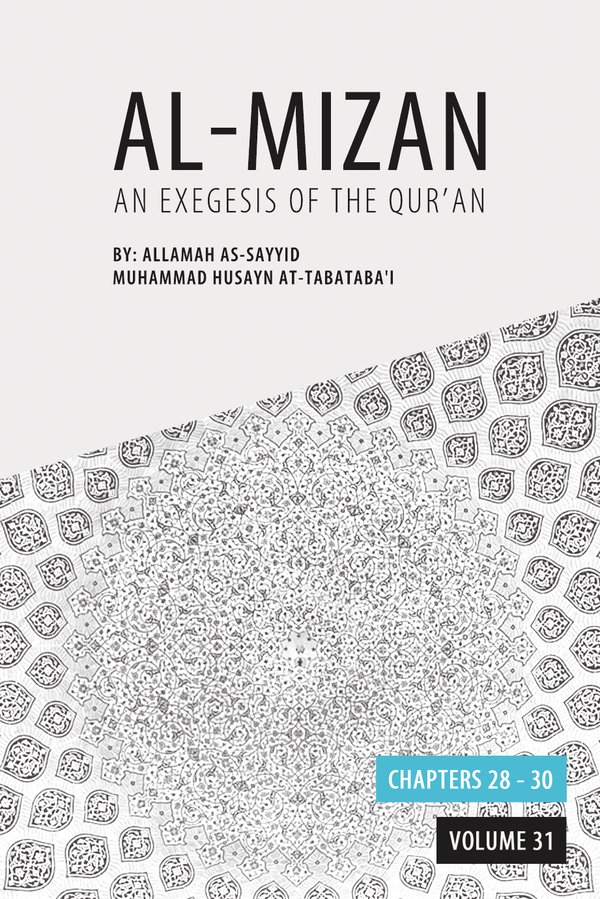
Volume thirty-one offers a detailed commentary on Sūrah al-Qaṣaṣ (Chapter 28), Sūrah al-ʿAnkabūt (Chapter 29), and Sūrah al-Rūm (Chapter 30). These chapters explore themes of divine justice, human accountability, historical reflection, and spiritual resilience.
In Sūrah al-Qaṣaṣ, ʿAllāmah Ṭabāṭabaʿī explores the story of Prophet Moses (a.s.), illustrating his early life, his calling as a prophet, and his eventual confrontation with Pharaoh. This narrative serves as a powerful example of divine intervention and the triumph of faith over tyranny. The commentary emphasizes the themes of patience and reliance on God, particularly during trials and oppression. ʿAllāmah reflects on the Qurʾānic parallels between the struggles of Moses and the plight of the early Muslims in Mecca, offering hope and reassurance to believers.
The commentary transitions into the broader lessons derived from the story of Moses, such as the necessity of divine guidance and the inevitability of justice. ʿAllāmah addresses the philosophical implications of free will and predestination, illustrating how the Qurʾān reconciles these concepts with human accountability. He also critiques the materialistic worldview of Pharaoh and his followers, contrasting it with the spiritual perspective advocated by the Qurʾān.
In Sūrah al-ʿAnkabūt, the chapter’s opening verses underline the trials faced by believers, asserting that faith must be tested for its sincerity. ʿAllāmah examines the historical narratives of past communities, such as the people of Noah, Abraham, and Lot, drawing lessons about the consequences of rejecting divine guidance. The chapter also highlights the transient nature of worldly power and the permanence of spiritual values.
A significant theme in Sūrah al-ʿAnkabūt is the concept of migration (hijrah) for the sake of preserving one’s faith. ʿAllāmah reflects on the Qurʾānic encouragement for believers to seek refuge in God’s earth, emphasizing the spiritual and ethical dimensions of migration. He also discusses the role of prayer in preventing immorality and wrongdoing, exploring its transformative impact on individual and communal life.
Sūrah al-Rūm shifts the focus to the broader historical and cosmic signs of God’s power and wisdom. The chapter opens with the prophecy of the Byzantine victory over the Persians, illustrating the Qurʾān’s integration of historical events into its spiritual message. ʿAllāmah reflects on the innate human disposition (fiṭra) toward recognizing God’s oneness and the ethical principles embedded in this disposition. He examines the Qurʾānic call to observe the natural world and human history as a means of understanding divine guidance.
Throughout this volume, ʿAllāmah engages with subtle theological and philosophical discussions, such as the relationship between divine justice and human freedom, the interplay between historical causality and divine will, and the spiritual implications of Qurʾānic narratives. He integrates these themes with practical guidance, providing a holistic understanding of the Qurʾānic worldview.
Volume thirty-one of Tafsīr al-Mīzān is a profound exploration of the Qurʾān’s teachings on faith, resilience, and divine justice. It offers timeless insights for navigating personal and communal challenges, making it an invaluable resource for deepening one’s connection to the Qurʾān and its transformative message.
Translators: Afzal Sumar and Alexander Khalili
Read this volume online
The commentary in this volume is on almizan.org:
Where to buy
See our authorised distributors, or email [email protected].