
Tafsir al-Mizan, Volume 32
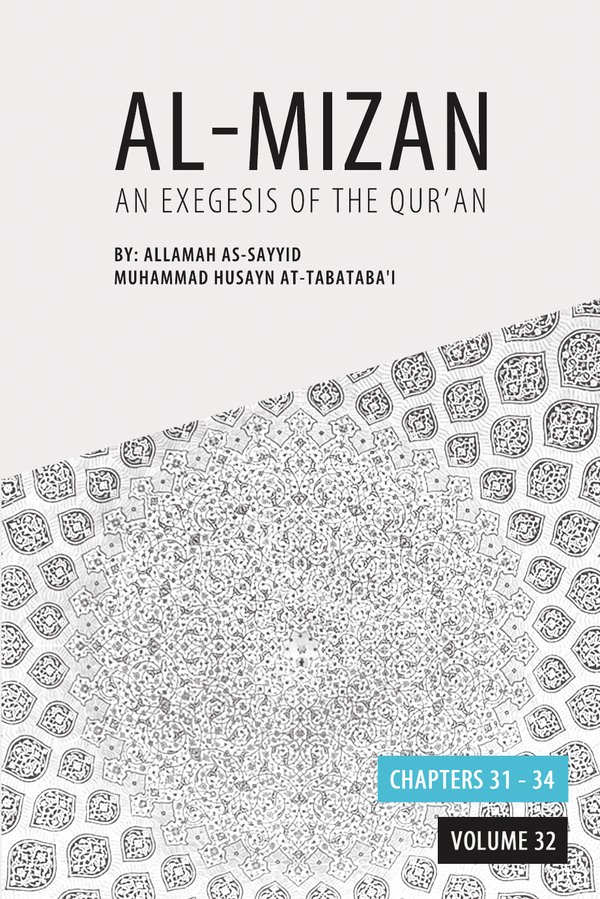
Volume thirty-two provides a comprehensive commentary on Sūrah Luqmān (Chapter 31), Sūrah al-Sajdah (Chapter 32), Sūrah al-Aḥzāb (Chapter 33), and Sūrah Sabaʼ (Chapter 34). These chapters explore key themes such as divine wisdom, the Day of Judgment, societal ethics, and historical lessons.
In Sūrah Luqmān, ʿAllāmah Ṭabāṭabaʿī focuses on the wisdom imparted by Luqmān to his son, particularly his exhortation to avoid polytheism, ascribing it as a great injustice. This chapter emphasizes gratitude towards God and one’s parents, reflecting on the ethical and spiritual principles that underpin human relationships. ʿAllāmah also examines the broader themes of divine unity and accountability, calling for reflection on God’s signs in creation and the natural world. The narrative of Luqmān is presented as a model of practical wisdom and moral clarity.
Sūrah al-Sajdah shifts the focus to the origins and destiny of humanity. ʿAllāmah explores the creation of human beings, the gift of the divine spirit, and the ultimate return to God. The chapter’s eschatological themes include vivid descriptions of resurrection and divine recompense. He reflects on the Qur’anic view of human life as a journey shaped by actions and decisions, underscoring the significance of faith and righteous deeds.
In Sūrah al-Aḥzāb, the commentary addresses societal challenges and the ethical responsibilities of the nascent Muslim community in Medina. ʿAllāmah discusses the rules and expectations for the Prophet’s household, the Battle of Khandaq, and the importance of unity and discipline in the face of external threats. This chapter emphasizes the virtues of modesty, respect, and the centrality of the Prophet’s leadership. ʿAllāmah provides an in-depth analysis of the verse of purification (āyah al-taṭhīr, 33:33) and the divine blessings upon the Prophet’s household.
The commentary on Sūrah Sabaʼ highlights the interplay between human actions and divine blessings. The chapter recounts the story of the people of Sabaʼ, who fell into disobedience despite their prosperity, resulting in their downfall. ʿAllāmah reflects on the lessons drawn from this narrative, emphasizing gratitude, humility, and the transient nature of worldly power. The chapter also discusses the unique gifts bestowed upon Prophets David and Solomon (peace be upon them), illustrating the ethical use of power and knowledge in service to God.
Throughout this volume, ʿAllāmah integrates theological, ethical, and historical discussions, offering a nuanced understanding of the Qur’anic worldview. Subtle topics include the nature of divine wisdom, the ethical dimensions of leadership, and the spiritual lessons derived from historical narratives. He consistently ties these themes to practical guidance for individuals and societies.
Volume thirty-two of Tafsīr al-Mīzān provides profound insights into the Qur’an’s teachings on faith, morality, and the human-divine relationship. It remains an invaluable resource for those seeking to deepen their understanding of the Qur’an and its application to personal and communal life.
Translators: Alexander Khalili & Dr. Amina Inloes
Read this volume online
The commentary in this volume is on almizan.org:
- Chapter 31: Luqmān
- Chapter 32: Al-Sajdah (The Prostration)
- Chapter 33: Al-Aḥzāb (The Confederates)
- Chapter 34: Sabaʾ (Sheba)
Where to buy
See our authorised distributors, or email [email protected].