
Tafsir al-Mizan, Volume 38
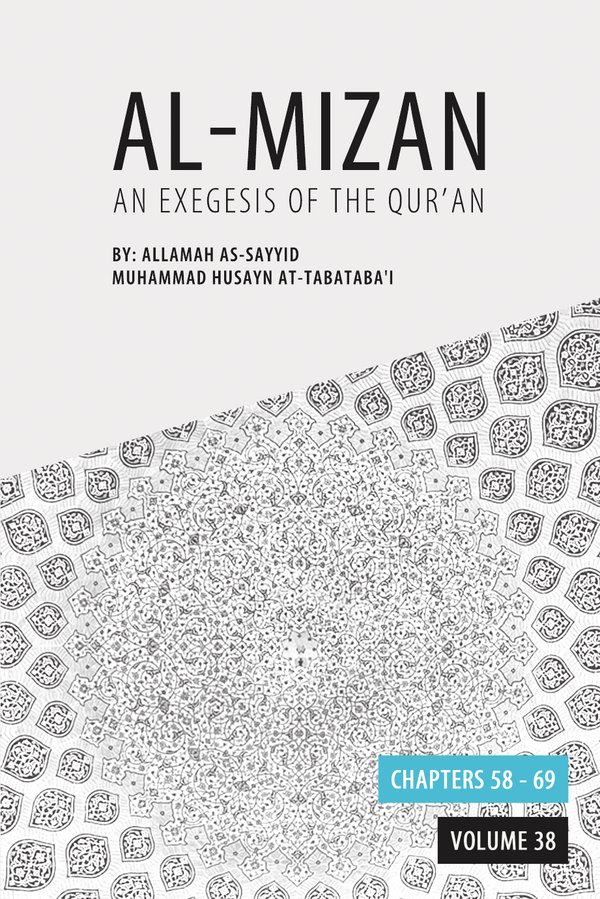
Volume thirty-eight provides a detailed commentary on chapters 58 to 69 of the Qur’an, covering Sūras al-Mujādilah, al-Ḥashr, al-Mumtaḥanah, al-Ṣaff, al-Jumuʿah, al-Munāfiqūn, al-Taghābun, al-Ṭalāq, al-Taḥrīm, al-Mulk, al-Qalam, and al-Ḥāqqah. These chapters span a range of themes, including societal ethics, the Day of Judgment, familial relationships, divine justice, and the attributes of God.
Sūrah al-Mujādilah opens with a discussion on the practice of ẓihār (a pre-Islamic form of divorce) and its rectification under Islamic law. ʿAllāmah Ṭabāṭabaʿī emphasizes the themes of justice, human dignity, and the necessity of adhering to divine laws. He also reflects on the etiquette of social interactions, including proper conduct during private conversations and gatherings.
In Sūrah al-Ḥashr, the commentary highlights the exile of the Banū al-Naḍīr and the implications of broken covenants. ʿAllāmah explores the ethical and spiritual lessons derived from these historical events, particularly the importance of trustworthiness and vigilance. The closing verses focus on the divine names and attributes, providing a theological framework for understanding God’s justice and mercy.
Sūrah al-Mumtaḥanah addresses the complexities of political and social alliances. ʿAllāmah explores the Qur’anic principles guiding interactions with non-Muslims and the emphasis on faith and integrity as the foundation of community relations. The commentary reflects on the importance of prioritizing allegiance to God and His Messenger over worldly ties.
In Sūrah al-Ṣaff, the Qur’an calls believers to unite and strive in the path of God. ʿAllāmah examines the historical and spiritual significance of collective effort and self-sacrifice. The mention of Prophet Jesus announcing the coming of the final Messenger reinforces the continuity of divine guidance.
Sūrah al-Jumuʿah explores the role of Friday prayer as a symbol of communal identity and renewal. ʿAllāmah emphasizes prioritizing spiritual obligations over worldly distractions, reflecting the importance of balance in a believer’s life.
The portrayal of hypocrisy in Sūrah al-Munāfiqūn serves as a warning against duplicity within the Muslim community. ʿAllāmah examines the psychological and societal impact of hypocrisy, urging sincerity and adherence to divine guidance. In Sūrah al-Taghābun, he broadens this reflection to encompass universal trials of faith and the interplay between divine justice and human agency.
Sūrah al-Ṭalāq and Sūrah al-Taḥrīm focus on familial relationships and the ethical principles governing them. ʿAllāmah provides practical insights into divorce, reconciliation, and the sanctity of domestic life, emphasizing compassion and responsibility.
The commentary on Sūrah al-Mulk reflects on the signs of God’s majesty in creation. ʿAllāmah discusses the cosmological arguments for divine power and the responsibility of humans to reflect on their place in the universe. Sūrah al-Qalam reaffirms the moral character of the Prophet Muḥammad in the face of accusations and adversity.
Finally, Sūrah al-Ḥāqqah presents vivid imagery of the Day of Resurrection and the ultimate accountability of all beings. ʿAllāmah reflects on the transient nature of worldly life and the eternal consequences of human actions.
Throughout this volume, ʿAllāmah integrates theological, ethical, and historical discussions, offering a nuanced understanding of the Qur’anic worldview. Subtle themes include the nature of divine justice, the ethical implications of human actions, and the spiritual lessons derived from historical narratives. His balanced approach ties the Qur’anic teachings to contemporary challenges, providing timeless guidance for believers.
Volume thirty-eight of Tafsīr al-Mīzān is a profound exploration of the Qur’an’s ethical, theological, and social teachings, offering readers valuable insights into the divine guidance necessary for personal and communal well-being.
Read this volume online
The commentary in this volume is on almizan.org:
- Chapter 58: Al-Mujādilah (The Pleading Woman)
- Chapter 59: Al-Ḥashr (The Banishment)
- Chapter 60: Al-Mumtaḥana (The Examined One)
- Chapter 61: Al-Ṣaff (The Ranks)
- Chapter 62: Al-Jumuʿah (Friday)
- Chapter 63: Al-Munāfiqūn (The Hypocrites)
- Chapter 64: Al-Taghābun (Mutual Loss and Gain)
- Chapter 65: Al-Ṭalāq (Divorce)
- Chapter 66: Al-Taḥrīm (The Prohibition)
- Chapter 67: Al-Mulk (The Kingdom)
- Chapter 68: Al-Qalam (The Pen)
- Chapter 69: Al-Ḥāqqah (The Sure Reality)
Where to buy
See our authorised distributors, or email [email protected].