
Tafsir al-Mizan, Volume 29
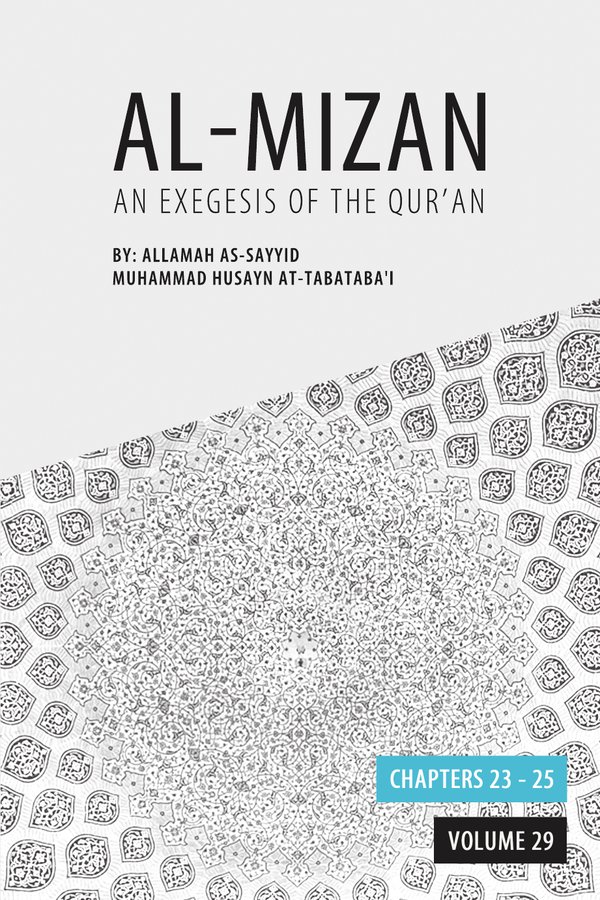
Volume twenty-nine covers the commentary on three significant chapters of the Qur’an: Sūrah al-Mu’minūn (Chapter 23), Sūrah al-Nūr (Chapter 24), and Sūrah al-Furqān (Chapter 25). This volume explores themes of faith, morality, divine guidance, and societal principles, offering a rich tapestry of theological and ethical insights.
The commentary on Sūrah al-Mu’minūn explores the characteristics of true believers, beginning with their humility in prayer, avoidance of vain activities, and dedication to charity. ʿAllāmah Ṭabāṭabaʿī examines the ethical and spiritual dimensions of these attributes, linking them to the broader Qurʾānic vision of human perfection. He also reflects on the creation of humankind and the divine blessings bestowed upon them, emphasizing God’s lordship and the necessity of worshiping Him alone. The narratives of past nations, including Noah’s people, serve as lessons on the consequences of moral deviation and rejection of divine guidance.
Sūrah al-Nūr addresses the principles of modesty, chastity, and social harmony. ʿAllāmah examines the incident of a false accusation involving a member of the Prophet’s household and its broader implications for safeguarding personal honor and integrity within the community. He also reflects on the symbolic “Verse of Light” (24:35), offering a profound philosophical discussion on the nature of divine light and causation. This chapter highlights the ethical responsibilities of believers in fostering a just and moral society, emphasizing family values, mutual respect, and the protection of private spaces.
The commentary on Sūrah al-Furqān emphasizes the distinction between truth and falsehood, highlighting the qualities of the “servants of the Merciful” (ʿIbād al-Raḥmān). ʿAllāmah discusses their humility, patience, and devotion, illustrating how these virtues lead to spiritual elevation and closeness to God. The chapter critiques idolatry and materialism, warning of their detrimental effects on individual and societal well-being. The themes of accountability, repentance, and the transformative power of faith are central to this discussion, offering guidance for navigating moral challenges.
Subtle discussions in this volume include the philosophical implications of divine causation, the interplay between free will and predestination, and the ethical foundations of social laws in Islam. ʿAllāmah Ṭabāṭabāʾī’s nuanced approach integrates theological inquiry with practical guidance, providing a comprehensive understanding of the Qurʾānic worldview.
Volume twenty-nine is a profound exploration of faith, ethics, and divine guidance, offering timeless lessons for personal and communal development. It remains an invaluable resource for those seeking to deepen their understanding of the Qurʾān and its application to contemporary issues.
Translator: Tawus Raja
Read this volume online
The commentary in this volume is on almizan.org:
- Chapter 23: Al-Muʾminūn (The Believers)
- Chapter 24: Al-Nūr (The Light)
- Chapter 25: Al-Furqān (The Distinction)
Where to buy
See our authorised distributors, or email [email protected].