
Tafsir al-Mizan, Volume 40
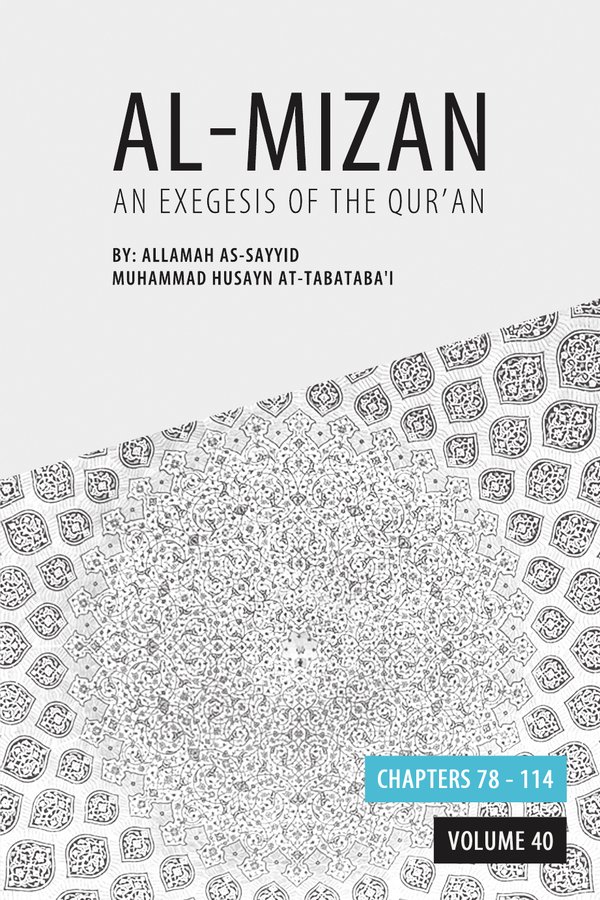
Volume forty of Tafsīr al-Mīzān by ʿAllāmah Muḥammad Ḥusayn Ṭabāṭabāʾī concludes his monumental exegesis, covering Sūrah al-Nabaʾ (Chapter 78) through Sūrah al-Nās (Chapter 114). This volume encapsulates key theological, eschatological, and ethical themes while offering profound reflections on the Qur’anic message as a whole.
The commentary begins with Sūrah al-Nabaʾ, which emphasizes the certainty of the Day of Judgment and the divine wisdom manifest in creation. ʿAllāmah Ṭabāṭabaʿī examines the natural signs and divine blessings as evidence for resurrection and accountability, reflecting on the Qur’anic descriptions of Paradise and Hell as ultimate outcomes for human actions.
In the mid-range chapters, including Sūrah al-Ḍuḥā (Chapter 93) and Sūrah al-Sharḥ (Chapter 94), ʿAllāmah reflects on the Prophet Muḥammad’s personal trials and divine care. These chapters convey hope, resilience, and the promise of ease following hardship, offering timeless spiritual lessons.
The commentary on Sūrah al-Takwīr (Chapter 81), Sūrah al-Infiṭār (Chapter 82), and other eschatological chapters provides vivid imagery of cosmic upheaval and the eventual gathering for judgment. ʿAllāmah analyzes the relationship between divine justice and human accountability, exploring how the Qur’an links moral conduct to ultimate recompense.
Sūrah al-Ikhlāṣ (Chapter 112) receives special attention for its concise yet profound articulation of divine oneness. ʿAllāmah explains the chapter’s centrality to Islamic theology, refuting anthropomorphic and polytheistic notions of God while emphasizing His transcendence and uniqueness. Similarly, in Sūrah al-Falaq (Chapter 113) and Sūrah al-Nās (Chapter 114), he elaborates on the themes of seeking divine refuge from external and internal evils, linking them to the Qur’an’s broader call for reliance on God.
Throughout the volume, ʿAllāmah integrates philosophical and theological discussions with Qur’anic exegesis. He addresses topics such as the harmony between divine justice and mercy, the role of human free will in shaping destiny, and the significance of spiritual purification. His reflections on divine guidance highlight the Qur’an’s timeless relevance in navigating moral and existential challenges.
The volume also reflects on the Qur’an’s literary and rhetorical excellence, with ʿAllāmah illustrating how its language and structure contribute to its enduring impact. These discussions serve as a culmination of his methodological approach, tying together insights from earlier volumes while offering a holistic understanding of the Qur’anic message.
Volume forty is both a conclusion to Tafsīr al-Mīzān and a gateway for readers to engage deeply with the Qur’anic teachings. It highlights the Qur’an’s transformative power and its guidance for all aspects of human life, making it an essential resource for scholars and believers alike.
Read this volume online
The commentary in this volume is on almizan.org:
- Chapter 78: Al-Nabaʾ (The Great News)
- Chapter 79: Al-Nāziʿāt (Those Who Pull Out)
- Chapter 80: ʿAbasa (He Frowned)
- Chapter 81: Al-Takwīr (The Winding Up)
- Chapter 82: Al-Infiṭār (The Cleaving)
- Chapter 83: Al-Muṭaffifīn (The Defrauders)
- Chapter 84: Al-Inshiqāq (The Splitting Open)
- Chapter 85: Al-Burūj (The Constellations)
- Chapter 86: Al-Ṭāriq (The Rising Star)
- Chapter 87: Al-Aʿlā (The Most High)
- Chapter 88: Al-Ghāshiyah (The Enveloper)
- Chapter 89: Al-Fajr (The Dawn)
- Chapter 90: Al-Balad (The City)
- Chapter 91: Al-Shams (The Sun)
- Chapter 92: Al-Layl (The Night)
- Chapter 93: Al-Ḍuḥā (The Forenoon)
- Chapter 94: Al-Inshirāḥ (The Expansion)
- Chapter 95: Al-Tīn (The Fig)
- Chapter 96: Al-ʿAlaq (The Clot)
- Chapter 97: Al-Qadr (The Destiny)
- Chapter 98: Al-Bayyinah (The Clear Proof)
- Chapter 99: Al-Zilzāl (The Quake)
- Chapter 100: Al-ʿĀdiyāt (The Chargers)
- Chapter 101: Al-Qāriʿah (The Pounder)
- Chapter 102: Al-Takāthur (The Rivalry)
- Chapter 103: Al-ʿAṣr (The Time)
- Chapter 104: Al-Humazah (The Scandal-monger)
- Chapter 105: Al-Fīl (The Elephant)
- Chapter 106: Quraysh
- Chapter 107: Al-Māʿūn (The Assistance)
- Chapter 108: Al-Kawthar (The Abundance)
- Chapter 109: Al-Kāfirūn (The Unbelievers)
- Chapter 110: Al-Naṣr (The Divine Help)
- Chapter 111: Al-Masad (The Palm Fiber)
- Chapter 112: Al-Ikhlāṣ (Sincerity)
- Chapter 113: Al-Falaq (The Daybreak)
- Chapter 114: Al-Nās (The People)
Where to buy
See our authorised distributors, or email [email protected].