
Tafsir al-Mizan, Volume 17
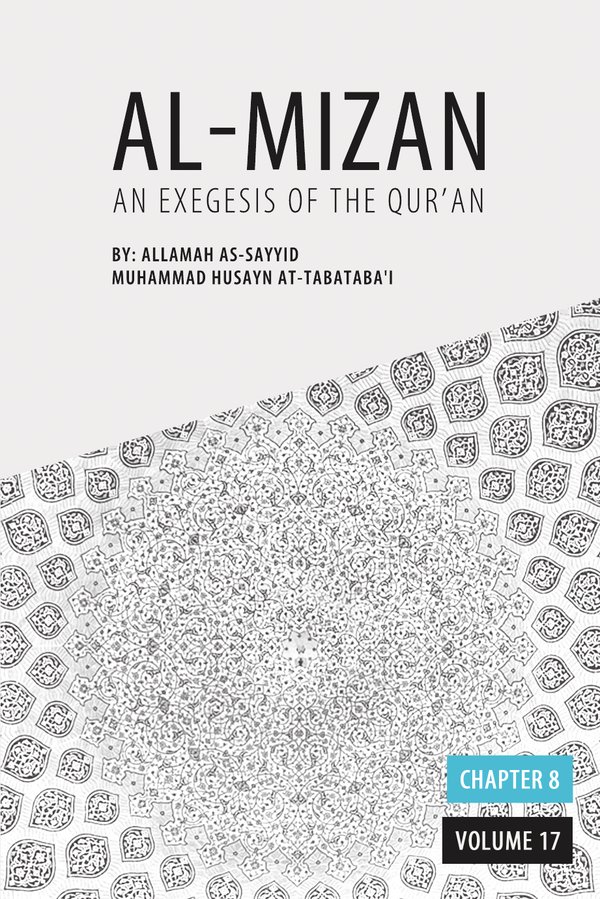
This volume provides an in-depth exegesis of Sūrah al-Anfāl (Chapter 8), which addresses themes of faith, divine justice, and the ethics of conflict. This chapter, often referred to as “Sūrah Badr,” reflects upon the Battle of Badr and derives broader lessons for individual and societal conduct.
The commentary begins by discussing the distribution of spoils of war, emphasizing the principles of divine ownership and collective responsibility. ʿAllāmah Ṭabāṭabaʿī highlights the Qurʾānic approach to resolving disputes among believers, advocating for reconciliation and adherence to divine commands. He explains how the rules surrounding anfāl (spoils of war) serve as a mechanism for maintaining social harmony and justice.
A significant portion of the chapter focuses on the characteristics of true believers, as described in verses 2–4. ʿAllāmah elaborates on their spiritual traits, including their reverence for God, trust in Him, and dedication to prayer and charity. These qualities, he notes, form the foundation of a cohesive and morally upright community. He also reflects on the concept of īmān (faith) as a dynamic and evolving state, deepened through reflection and adherence to divine guidance.
The commentary then transitions to the narrative of the Battle of Badr, which is presented not merely as a historical event but as a manifestation of divine support for the faithful. ʿAllāmah examines the moral and spiritual lessons derived from this victory, including the importance of unity, reliance on God, and perseverance in the face of adversity. He also discusses the role of angels in assisting the believers and the psychological impact of divine reassurance on the battlefield.
Another key theme in this volume is the ethical framework for warfare, as outlined in verses 41–75. ʿAllāmah analyzes the rules concerning prisoners of war, treaties, and the proportionality of force, emphasizing the Qurʾānic call for restraint and the pursuit of peace wherever possible. He reflects on the balance between justice and mercy, illustrating how these principles are integral to Islamic governance and societal well-being.
Throughout the commentary, ʿAllāmah integrates theological discussions on topics such as divine justice, free will, and predestination. He addresses the philosophical underpinnings of human accountability and the interplay between divine decree and individual agency. These reflections provide a deeper understanding of the Qurʾānic worldview and its implications for personal and communal ethics.
Subtle discussions in this volume include the significance of divine tests and trials, the dynamics of leadership in times of crisis, and the spiritual dimensions of victory and defeat. ʿAllāmah’s nuanced approach weaves together historical analysis, theological inquiry, and practical guidance, offering a holistic interpretation of Sūrah al-Anfāl.
Volume seventeen serves as a profound exploration of the ethical, spiritual, and societal dimensions of the Qurʾānic message. It provides timeless insights for navigating challenges and fostering a just and harmonious community, making it an invaluable resource for readers seeking a deeper connection with the Qurʾān.
Read this volume online
The commentary in this volume is on almizan.org:
Where to buy
See our authorised distributors, or email [email protected].