
Tafsir al-Mizan, Volume 35
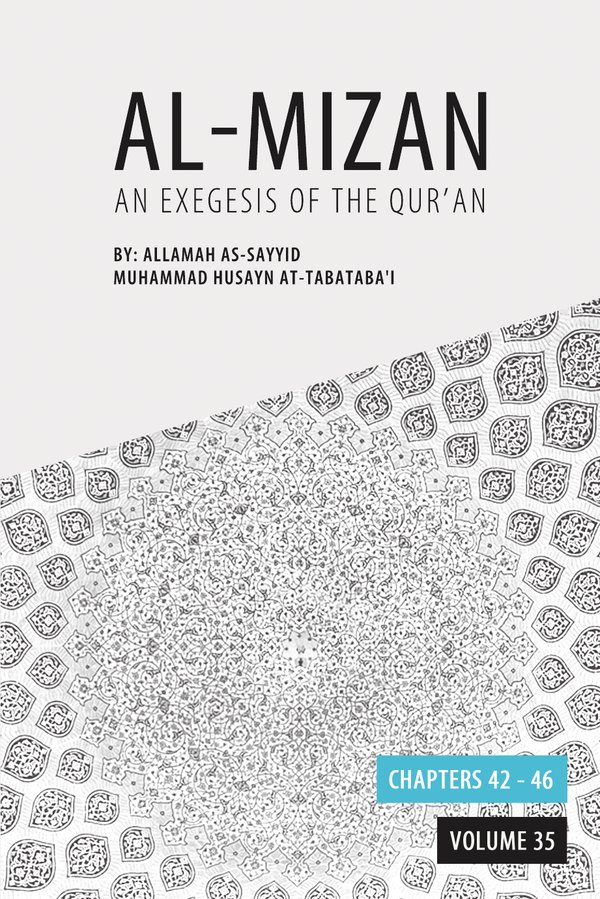
Volume thirty-five offers an in-depth commentary on five chapters of the Qur’an: Sūras al-Shūrā (Chapter 42), al-Zukhruf (Chapter 43), al-Dukhān (Chapter 44), al-Jāthiyah (Chapter 45), and al-Aḥqāf (Chapter 46). These Meccan chapters, often referred to as the Ḥā Mīm chapters due to their opening disconnected letters, explore themes of divine revelation, monotheism, and the ultimate consequences of belief and disbelief.
In Sūrah al-Shūrā, the discussion revolves around revelation as a communication from God to His prophets. ʿAllāmah Ṭabāṭabaʿī reflects on the centrality of revelation in guiding humanity and its connection to divine mercy and justice. The chapter also addresses the concept of sustenance (rizq) and the responsibility of believers to recognize God’s unity and signs in creation. The chapter includes the significant “Verse of Affection” (āyat al-mawaddah, 42:23), which enjoins love for the Prophet’s family.
The commentary on Sūrah al-Zukhruf critiques the idolaters’ false beliefs, particularly the claim that God has offspring. ʿAllāmah examines the Qur’anic arguments refuting such notions, highlighting the message of previous prophets and the consequences of rejecting divine guidance. The chapter also emphasizes the futility of worldly adornments (zukhruf) compared to the eternal reward of paradise.
In Sūrah al-Dukhān, the focus is on the sending of revelation during the blessed Night of Ordainment (Laylat al-Qadr). ʿAllāmah explores the Qur’an as a mercy and guidance for humanity, contrasting it with the punishment of past nations who rejected their prophets. The chapter reiterates the themes of divine justice and human accountability.
Sūrah al-Jāthiyah highlights the importance of reflecting on God’s signs in creation as evidence of His oneness. The chapter warns of the consequences awaiting those who turn away from divine guidance and emphasizes adherence to Sharīʿah as the path to salvation. ʿAllāmah investigates the concept of deeds being recorded and presented on the Day of Judgment, a central theme of this chapter.
The commentary on Sūrah al-Aḥqāf highlights the arguments for resurrection and the oneness of God, addressing the challenges posed by idolaters who deny these truths. The destruction of the people of Hūd is recounted as a warning to the disbelievers. The chapter also includes reflections on the responsibilities of the faithful and the role of divine guidance in leading humanity toward felicity.
Throughout this volume, ʿAllāmah engages in subtle theological and philosophical discussions, such as the nature of divine speech, the ethical implications of free will, and the interrelation between divine justice and human accountability. He integrates these themes with historical narratives, providing a comprehensive understanding of the Qur’anic worldview.
Volume thirty-five of Tafsīr al-Mīzān is a profound exploration of the Qur’anic teachings on faith, morality, and divine revelation, offering timeless insights for readers seeking a deeper connection with the Qur’an and its guidance for humanity.
Read this volume online
The commentary in this volume is on almizan.org:
- Chapter 42: Al-Shūrā (The Consultation)
- Chapter 43: Al-Zukhruf (The Ornaments)
- Chapter 44: Al-Dukhān (The Smoke)
- Chapter 45: Al-Jāthiyah (The Kneeling)
- Chapter 46: Al-Aḥqāf (The Sand Dunes)
Where to buy
See our authorised distributors, or email [email protected].