
Tafsir al-Mizan, Volume 15
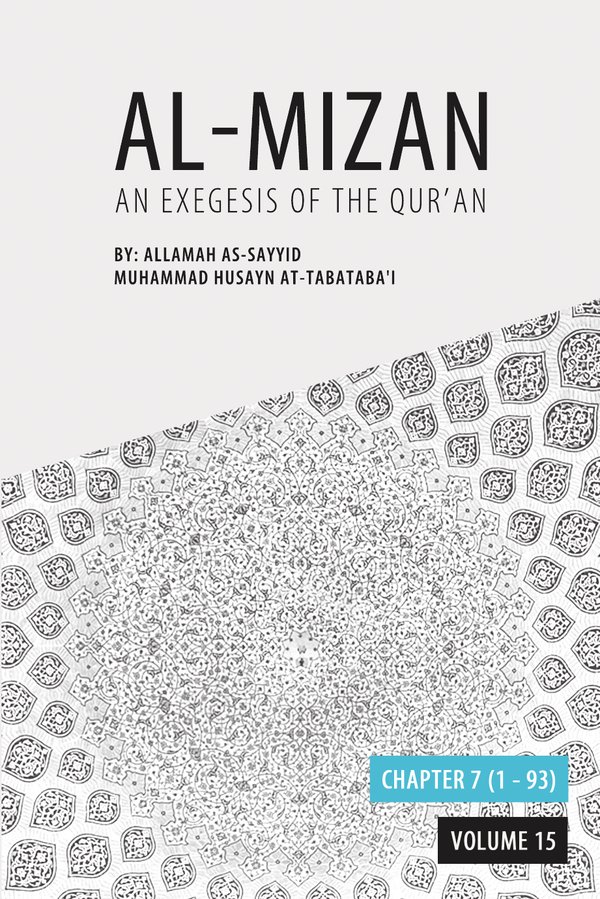
Volume fifteen begins the commentary on Sūrah al-Aʿrāf (Chapter 7), covering verses 1–93. This volume examines profound theological, ethical, and philosophical discussions while addressing historical narratives and their spiritual significance. ʿAllāmah Ṭabāṭabaʿī’s commentary on Sūrah al-Aʿrāf is considered by many scholars as “the peak of al-Mīzān.”
The volume opens with an exploration of the Qurʾān as a divine communication (verses 1–2). ʿAllāmah emphasizes the Qurʾān’s role as both a warning for humanity and a reminder for believers, highlighting its universal applicability and profound moral guidance. The commentary reflects on the concept of divine covenants and humanity’s obligations to adhere to them (verse 3).
One of the central themes is the story of the creation of Ādam (a.s.) and the role of Iblīs (verses 10–25). ʿAllāmah provides a detailed analysis of Iblīs’s rebellion and his enmity toward humanity. This section examines philosophical questions regarding free will, predestination, and the rationale behind divine tests. He critiques simplistic interpretations of these narratives, offering a subtle understanding rooted in Qurʾānic principles and rational inquiry.
The commentary addresses broader ethical dimensions, such as the concepts of felicity and wretchedness (verses 26–36). ʿAllāmah reflects on humanity’s dual potential for spiritual elevation or moral downfall, linking this to the nature of divine guidance and human responsibility. The discussion includes an analysis of narrations related to ṭīnah (clay) and its metaphorical implications for human disposition and character.
A significant section focuses on the Aʿrāf (elevations or heights) and the people associated with it (verses 37–53). ʿAllāmah explores the various exegetical perspectives on this term, linking it to themes of accountability, moral discernment, and divine justice. This discourse underlines the Qurʾānic emphasis on the consequences of human choices and the scales of justice on the Day of Judgment.
Another profound theme is the duality of creation and command (khalq and amr), discussed in the context of God’s throne (ʿArsh) and its symbolic meaning (verses 54–58). ʿAllāmah provides a philosophical analysis of these terms, explaining their implications for understanding divine sovereignty and the interconnectedness of the material and spiritual realms.
The historical narratives of the prophets, including Noah, Hūd, Ṣāliḥ, Lot, and Shuʿayb (verses 59–93), are extensively discussed. These stories serve as moral and spiritual lessons, illustrating the patterns of divine guidance, human response, and the ultimate triumph of truth. ʿAllāmah contrasts these Qurʾānic accounts with other scriptural traditions, emphasizing the unique perspective and coherence of the Qurʾān.
Subtle discussions in this volume include the Qurʾānic view of human reason and its validity, the philosophical implications of divine actions, and the balance between divine mercy and justice. ʿAllāmah also examines narrations related to these themes, offering insights into their theological and practical relevance.
Volume fifteen is a profound exposition of Qurʾānic principles, blending meticulous exegesis with philosophical and ethical reflections. It continues to serve as a vital resource for understanding the Qurʾān’s timeless guidance and its relevance to contemporary challenges.
Translator: Tawus Raja
Read this volume online
The commentary in this volume is on almizan.org:
Where to buy
See our authorised distributors, or email [email protected].