
Tafsir al-Mizan, Volume 13
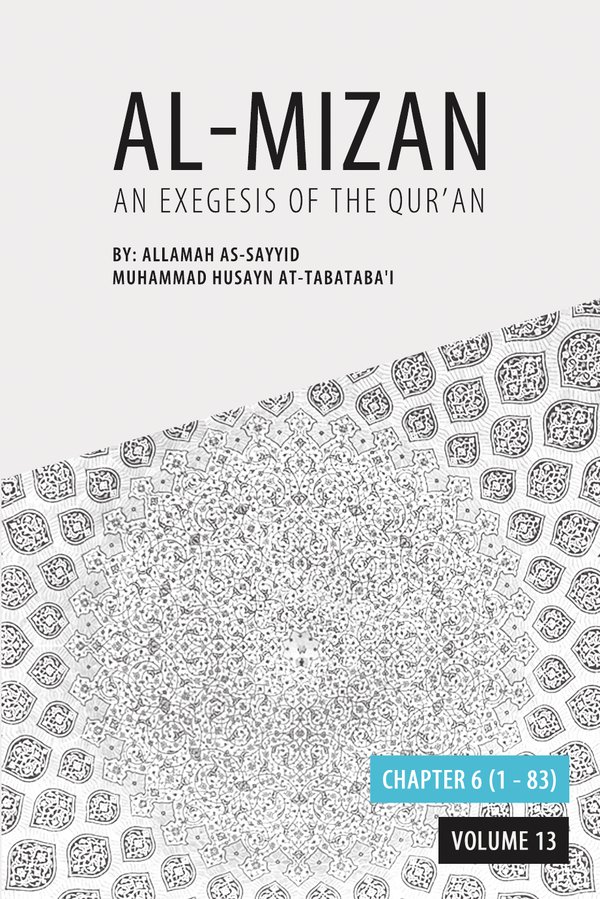
The volume focuses entirely on Sūrah al-Anʿām (Chapter 6), covering verses 1–83. It begins by affirming the unity of God as the Creator of the heavens and the earth, the darkness and the light (verses 1–3). ʿAllāmah Ṭabāṭabaʿī elaborates on the systematic nature of creation, emphasizing its reflection of God’s oneness and the absurdity of associating partners with Him. This framework establishes the foundation for the broader arguments against polytheism that run throughout the chapter.
A significant section (verses 4–11) critiques the stubbornness of the disbelievers who reject divine signs. The commentary highlights the consequences of such rejection, warning of the inevitable emergence of truth and the downfall of those who mock it. ʿAllāmah also reflects on the lessons from previous generations destroyed for their transgressions, drawing parallels to the fate awaiting persistent deniers of truth.
In verses 12–32, the focus shifts to humanity’s relationship with God. Discussions include the universal accountability to God and the transient nature of worldly life. ʿAllāmah provides a deep analysis of the innate recognition of monotheism in human nature, critiquing the polytheists’ deviation from this natural disposition.
One of the profound themes in this volume is the exclusivity of divine knowledge over the unseen (verse 59). ʿAllāmah discusses the “keys of the unseen” as being solely within God’s domain, underscoring His omniscience and the limitations of human understanding. This verse serves as a basis for exploring the broader implications of divine knowledge and human humility.
A fascinating discussion in this volume pertains to the concept of animal societies (verses 37–55). ʿAllāmah reflects on the Qurʾānic recognition of animals as communities similar to humans, emphasizing the divine wisdom in creation and humanity’s responsibility towards all living beings. This discourse bridges scientific observation with spiritual insights, highlighting the harmony of creation.
The narrative of Prophet Abraham (a.s.) dominates the latter part of the volume (verses 74–83). ʿAllāmah examines Abraham’s journey in discovering the truth of monotheism and his rejection of idolatry. The commentary contrasts the Qurʾānic account of Abraham’s story with Biblical narratives, addressing inconsistencies in the latter and affirming the Qurʾānic portrayal as both rational and divinely inspired. This section also explores Abraham’s lasting impact on human society and his role as a universal symbol of faith.
Subtle discussions throughout the volume include the philosophical underpinnings of divine justice, the interplay of free will and predestination, and the ethical framework guiding human behavior. ʿAllāmah highlights the Qurʾānic emphasis on reason and reflection as essential tools for understanding divine guidance.
Volume thirteen showcases ʿAllāmah Ṭabāṭabaʿī’s scholarly depth, blending rigorous exegesis with philosophical and ethical insights. It is a valuable resource for anyone seeking a deeper understanding of Qurʾānic teachings on monotheism, divine justice, and humanity’s place within creation.
Read this volume online
The commentary in this volume is on almizan.org:
Where to buy
See our authorised distributors, or email [email protected].